Biologically Driven Autonomous Vehicle Research

Biologically Driven Autonomous Vehicle Research

Translate biological movement into robotic vehicle commands while independent sensors provide collision avoidance.

RoboticsComputer Vision
0 viewsOctober 28, 2026Last updated October 28, 2026
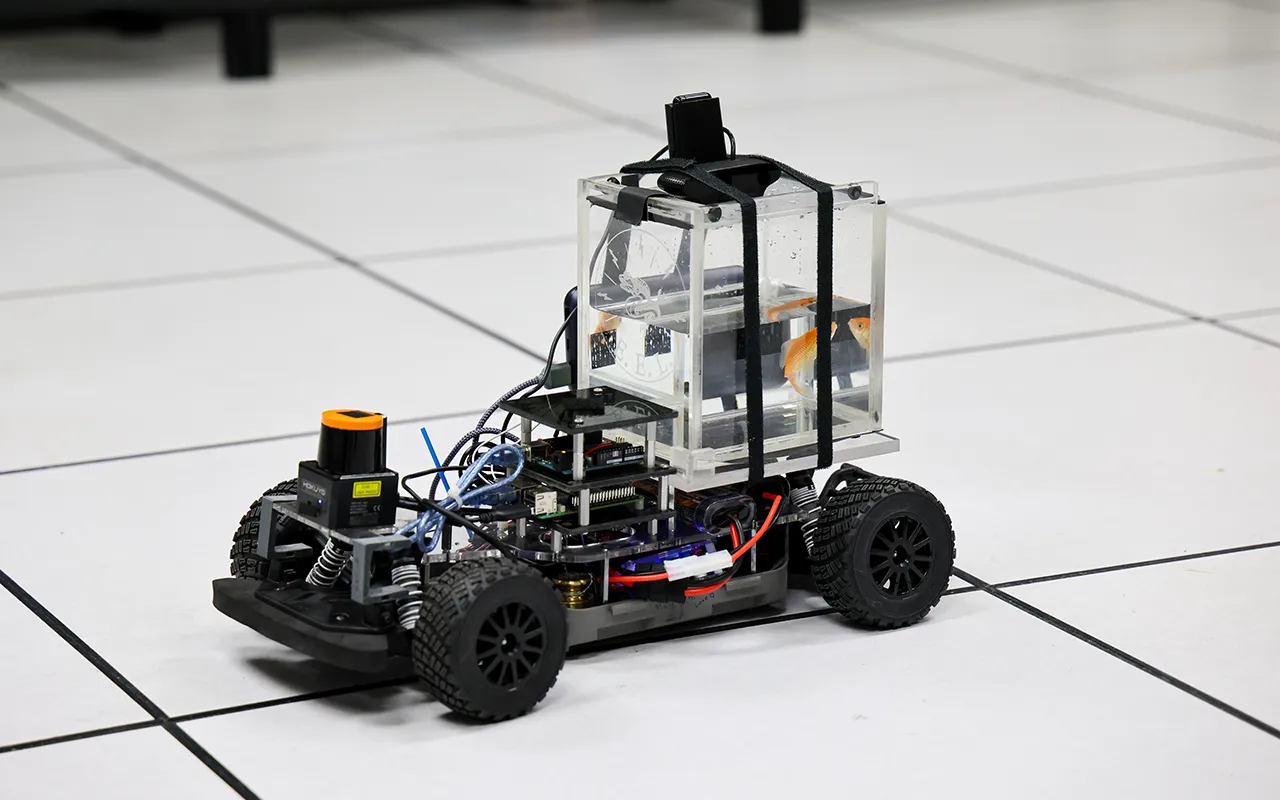
This project investigates how biological movement and other human or animal signals can be used to control autonomous systems. In the initial prototype, a camera and computer-vision system track the movement of a goldfish within different regions of its tank. Those movements are translated into steering and throttle commands for a small robotic vehicle. LiDAR and infrared sensors provide independent safety overrides to prevent collisions. Although the prototype uses a fish, the underlying control architecture could be adapted to eye movement, muscle signals, gestures, or other biological inputs.